Commercial Site Grading in Baton Rouge, LA: Elevations, Soil, Sequencing, and Contractor Selection
Every commercial project sits on a number that nobody outside the trade ever sees: the finished grade. Get it right and the parking lot drains, the slab stays dry, and the turf establishes on schedule. Get it wrong and the punch list grows for years. Commercial site grading in Baton Rouge, LA carries more weight than it does in most American markets because the region combines flat topography, expansive clay, a high water table, and rainfall that arrives in short violent bursts.
Flora Landscape Contractors has worked this ground for 16 years, holds a Louisiana Commercial License alongside landscape horticulture and irrigation contractor licenses, and has installed more than 20 million square feet of sod across the region.
This guide covers what grading includes, how the local soil changes the approach, where it belongs in your construction schedule, and how to evaluate the crew you hire.
Related: Attract More Customers With Strategic Commercial Landscaping in Zachary, LA
What Is Commercial Site Grading?
Commercial site grading is the process of shaping raw or existing ground to a designed set of elevations so that structures, pavement, utilities, and planted areas all sit where the engineer intended. It covers cut and fill, moisture conditioning, compaction, subgrade preparation, and the final shaping that receives sod, mulch, or pavement.
The work is measured, not eyeballed. A grading crew works off a civil plan with spot elevations, contour lines, and a benchmark, then confirms the built result with survey equipment or GPS-guided machines. Tolerances on a commercial pad are typically expressed in tenths of a foot, and finish areas around walks and entrances are tighter still.
Grading also differs from excavation, though the two overlap on most jobs. Excavation removes material for footings, utility trenches, and detention basins. Grading distributes and compacts material so the whole site drains as a system and supports the loads placed on it.
Our drainage and grading service treats those two questions as one problem, because a slope that looks correct on paper fails the moment the soil beneath it settles.
Why Does Commercial Site Grading Matter More in Baton Rouge, LA?
East Baton Rouge Parish sits on the eastern edge of the Mississippi alluvial plain, which means very little natural fall across a typical commercial parcel. Water does not leave a flat site on its own. It leaves because somebody designed a path and a crew built that path within a fraction of an inch.
Rainfall intensity compounds the problem. The Gulf Coast pattern delivers several inches in a single afternoon during the warm months, then tropical systems add multi-day totals in late summer. A parking lot that ponds under a two-inch rain becomes a liability under a six-inch rain, and tenants notice.
The third factor is the water table. Shallow groundwater limits how deep a system infiltrates and makes positive surface drainage the primary defense rather than a backup. Subsurface pipe still matters, and it performs far better when the surface above it already sheds water toward the inlets.
Property managers who inherit a poorly graded site usually discover it the same way: a low corner that stays wet, turf that dies back every summer, and asphalt that alligators early. Our commercial services team regrades those areas as remedial work, and the repair costs more attention than the original grading would have.
What Is the Difference Between Rough Grading and Finish Grading?
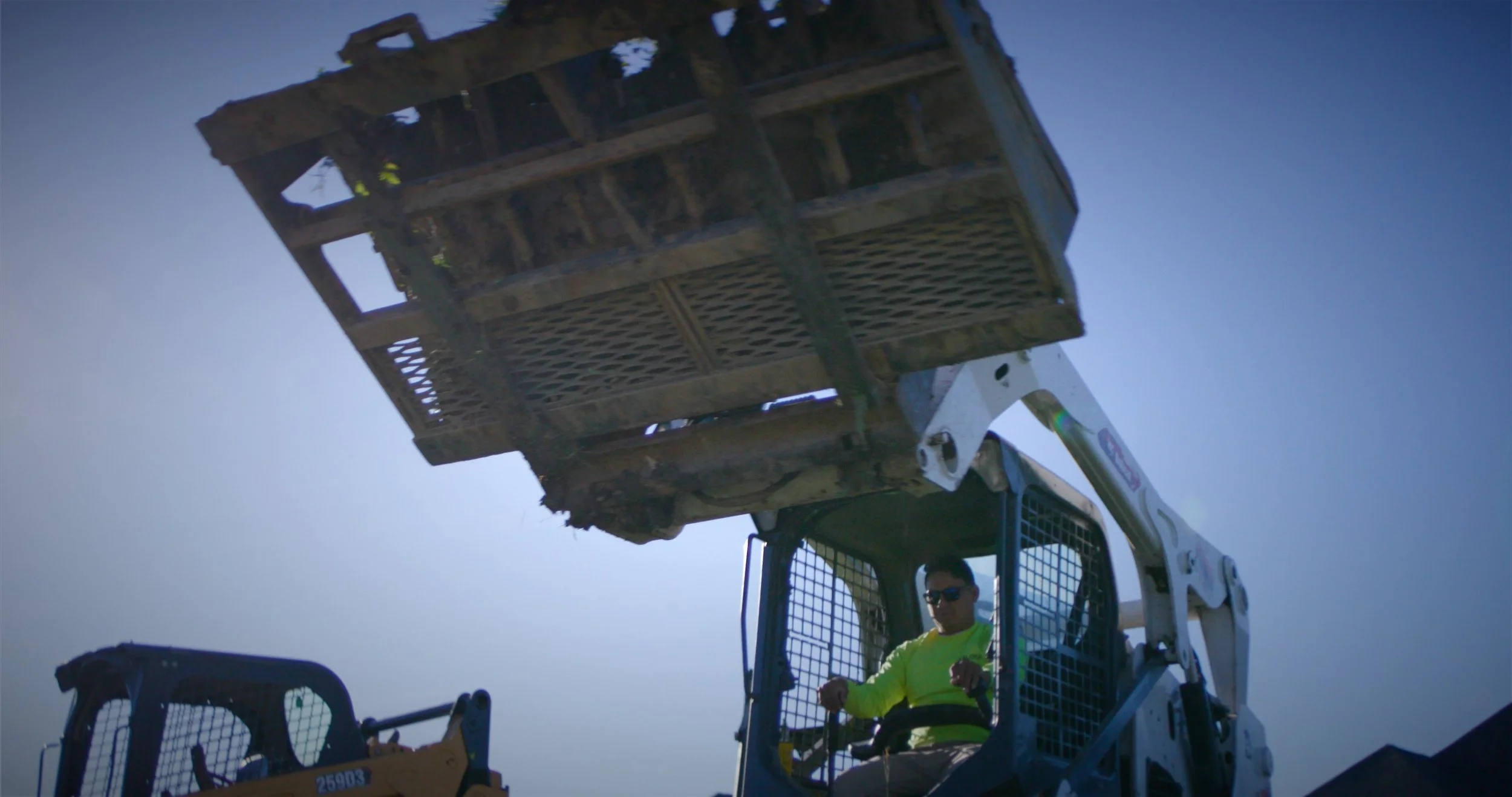
Rough grading establishes the basic shape of the site. Crews strip topsoil, cut the high areas, fill the low areas in controlled lifts, and compact each lift to a specified density before the next one goes down. At the end of rough grading, the site reads as the finished project in outline, sitting a few inches below final elevation.
Finish grading closes that gap. It sets the exact subgrade under pavement and slabs, shapes swales and berms to their designed cross section, spreads and levels topsoil in planted areas, and blends new elevations into existing curbs, walks, and adjacent property.
Where Projects Lose Time
The handoff between the two stages causes most schedule slippage. If rough grade sits high, the finish crew hauls material off the site at a moment when the pavement subcontractor is already mobilized. If it sits low, the fill goes in late, gets compacted poorly under time pressure, and settles in the first wet season.
Why the Landscape Areas Deserve the Same Rigor
Islands, buffers, and lawn panels receive the runoff that pavement sheds. Those areas need designed slope, uncompacted planting soil, and enough depth for roots. Our plantings and sodding crews work directly behind the grading crew for that reason, because sod laid on a compacted, poorly shaped subgrade fails within one season.
How Does Baton Rouge Clay Soil Change the Grading Approach?
Local soils carry a high percentage of expansive clay, which swells when wet and shrinks when dry. That movement drives slab cracking, pavement heave, and the seasonal humps and dips that show up in walkways across the parish. Grading practice has to account for that behavior rather than ignore it.
Moisture content governs everything. Clay compacted too dry gains density that it loses the moment it takes on water, and clay compacted too wet pumps under equipment and refuses to hold a grade. Crews working the parish watch moisture closely and stop when a lift is out of range, which is one reason weather delays on a clay site are legitimate rather than convenient.
Undercutting is common on poor subgrade. Where the native material tests unsuitable, crews remove it and replace it with select fill or a stabilized section, sometimes with lime or cement treatment on larger commercial pads. That decision belongs to the geotechnical engineer, and the grading contractor executes it.
Drainage design also shifts. Infiltration rates in heavy clay are low enough that surface conveyance carries the load, so swales, curb cuts, and inlet placement do more work than they would in sandier regions. We wrote about how this same soil behaves under turf in our post on lawn service crews tackling clay-heavy soil.
Related: Top Masonry Contractors in Baton Rouge, LA for Quality Craftsmanship
When Should Commercial Site Grading Happen in the Construction Schedule?
Rough grading belongs immediately after clearing and erosion control, before any vertical work begins. The pad elevation drives the finished floor, the finished floor drives the door thresholds, and the thresholds drive the walks. Setting those numbers late forces every downstream trade to absorb the difference.
Finish grading belongs near the end, after utilities are backfilled and pavement is placed, and it is the point where many schedules run out of room. Crews arrive to shape topsoil in the same week the owner wants a certificate of occupancy, and the planted areas suffer for it.
Sequencing With Utilities and Pavement
Every trench crossing a finish-graded area destroys that grade. Sequencing utility work ahead of finish grading avoids rework, and it also avoids the trench settlement that shows up months later as a line of low turf running across a lawn panel.
Phased Sites and Developer Schedules
Multi-building developments grade in phases, which means temporary drainage patterns carry a partially built site through a full rainy season. Those interim conditions need design attention rather than improvisation. Our builder and developer services group plans that interim drainage as part of the scope, and our crews respond to short-notice work requests when a phase boundary shifts.
Who Is Responsible for Site Grading on a Commercial Project?
Responsibility splits along the plan set. The civil engineer sets the elevations, slopes, and stormwater design. The general contractor owns the schedule and the pad. The site or landscape contractor executes the grading, and on many projects also owns the finish grade, topsoil, irrigation, and planting.
Problems surface at the seams. The pavement contractor works to a subgrade somebody else built. The landscape contractor inherits areas compacted by equipment traffic that sat outside everyone's scope. Naming those transitions in the contract removes most of the friction before it starts.
Owners and property managers sit above all of it, and they carry the consequence. A site that ponds is an owner problem long after the contractors demobilize, which is why involving the grading and drainage contractor during design review pays for itself. Our team reads the civil set before the first machine arrives and raises conflicts while they are still cheap to fix.
What Slopes and Tolerances Does a Commercial Site Need?
Pavement typically runs a minimum of one percent for asphalt and slightly less for concrete, with two percent common where ponding tolerance is low. Flat spots inside those tolerances are where water sits, so field verification matters more than the number on the plan.
Ground around a building generally falls away at roughly five percent across the first ten feet, giving the foundation a defended margin. Accessible routes and parking work under stricter rules, with running and cross slopes capped by federal accessibility standards, and those areas need survey confirmation rather than a visual check.
Turf and planted areas hold their own range. Lawn panels typically fall at two percent or more so they shed water without scalping under a mower, and swales generally run at one percent or better with a designed cross section. Our lawn care and maintenance division sees the results of both good and poor slope every week across the parish.
Tolerance is the other half of the specification. A plan calling for two percent fall over sixty feet allows very little construction error before a low spot appears, which is why GPS machine control and as-built verification have become standard on commercial work.
What Goes Wrong When a Commercial Site Is Graded Poorly?
Standing water is the visible symptom. Ponding in a parking field shortens pavement life, breeds mosquitoes, and creates slip and trip exposure at the exact locations where customers walk.
Foundation and slab problems follow. Water held against a structure in expansive clay drives seasonal movement, and that movement shows up as cracked slabs, sticking doors, and separated joints in masonry.
Landscape failure comes next. Turf drowns in the low areas and burns in the high ones, shrubs decline in saturated root zones, and irrigation coverage rarely corrects either condition.
The last cost is administrative. Regrading an occupied commercial property means closed parking areas, phased work, and disruption to tenants, and it is the reason our commercial project portfolio includes corrective grading alongside new construction. Getting the elevations right during construction avoids all of it.
How Do You Choose a Commercial Site Grading Partner in Baton Rouge, LA?
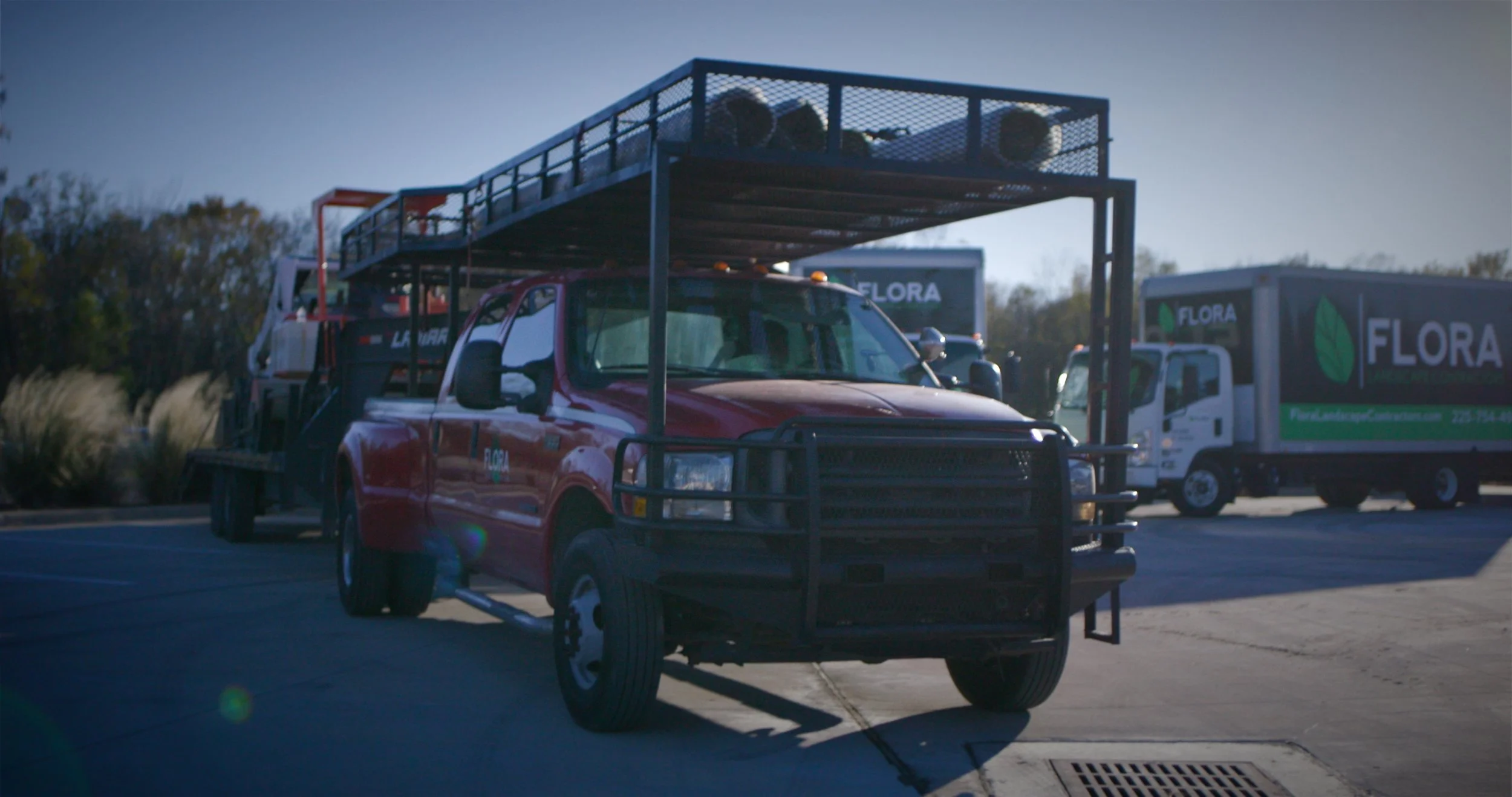
Start with licensing and local record. A Louisiana Commercial License is the baseline, and a contractor who has worked parish soils across many seasons brings judgment that a plan set does not contain. Our company background covers the licenses we hold and the work behind them.
Ask who does the work. Firms that broker grading to a rotating list of subcontractors lose control of quality at the exact stage where quality is invisible. Our crews are employees, which is what allows us to hold a schedule and stand behind a grade.
Ask about scope continuity. A contractor who handles grading, drainage, irrigation, sod, and long-term maintenance carries responsibility across the seams instead of pointing at the next trade. That continuity is also why our landscape design and construction group sits in the same building as the crews who build the work.
Questions Worth Asking Before You Move Forward
Ask how the firm verifies finished elevations and what documentation you receive. Ask how it handles unsuitable subgrade and who makes that call. Ask how it protects finish grade during the last weeks of construction. Ask what happens in year two if something settles.
Local Presence
Commercial work in this market runs across East Baton Rouge, Ascension, and Livingston parishes, and a contractor with crews already in those areas responds faster to weather and schedule changes.
Our Baton Rouge landscape design and construction page covers the local service footprint, and our hardscape and paving work shows how surfaces and grade get built together.
Schedule a Commercial Site Grading Consultation with Flora Landscape Contractors
Send us the civil set and a target date, and our team will walk the parcel, review the elevations against what the ground is actually doing, and give you a scope that covers grading, drainage, and everything planted on top of it.
Developers, general contractors, and property managers across East Baton Rouge, Ascension, and Livingston parishes work with our crews because one company carries the ground through to the finished landscape.
Reach our office through the contact page to schedule commercial site grading with Flora Landscape Contractors.
In Summary
Does commercial site grading in Baton Rouge, LA require different practice than in other markets?
Flat terrain, expansive clay, a shallow water table, and intense rainfall put most of the drainage burden on surface slope, and moisture control during compaction determines how well that slope survives the first wet season.
When should a developer bring a grading contractor into a Baton Rouge project?
During design review, before rough grading starts. Conflicts between pad elevations, thresholds, walks, and planted areas are inexpensive to resolve on paper and expensive to resolve in the field.
Who is accountable for finish grade in East Baton Rouge Parish commercial work?
The contract decides, and it should say so plainly. On our projects the finish grade, topsoil, irrigation, and planting sit under one scope so that no seam exists between the crew that shapes the ground and the crew that plants it.
What does poor grading cost an owner in Prairieville, Zachary, or Baton Rouge?
Shortened pavement life, slab movement in clay soils, repeated turf replacement, and eventual regrading of an occupied property with all the tenant disruption that brings. We covered the property-image side of this in our article on strategic commercial landscaping in Zachary, and the water-handling side in our piece on protecting property from water with nowhere to go.