
Commercial Landscape Maintenance in Baton Rouge, LA: Writing a Scope You Can Enforce

Property managers rarely have a landscape problem. They have a scope problem, and in Baton Rouge, LA a commercial landscape maintenance contract written in adjectives is what produces most of the complaints that follow. A scope is the only instrument you have once the contract is signed.
Written well, it settles arguments before they start, while a loose one guarantees a year of conversations about whether something was supposed to have been done.
Flora Landscape Contractors holds a Louisiana Commercial License alongside landscape horticulture, irrigation contractor and licensed arborist credentials.
Commercial licensing is the baseline for the kind of work this article describes. What follows is how to write a scope that a facility manager actually holds a contractor to.
Related: Experience the Difference With Expert Lawn Service in Oak Hills Place, LA
What Turns a Vague Commercial Maintenance Scope Into an Enforceable One?
Numbers and thresholds in place of adjectives turn a vague scope into an enforceable one. A scope that promises a property will be kept neat is unenforceable, because neat is a matter of opinion and opinions differ between a facility manager and a crew leader.
A scope that specifies mowing frequency by season, a turf height range, an edging interval, a bed weeding threshold and a response window for storm debris gets checked against reality by anybody walking the site. Writing those numbers also surfaces disagreements while they are still cheap to resolve. The document becomes a measuring stick rather than a promise.
What Belongs in a Commercial Maintenance Scope That Most Contracts Leave Out?
Response times, storm provisions and a measurable definition of acceptable condition belong in a scope, and most contracts leave them out. A scope that lists services without saying how quickly an irrigation break gets addressed, or what happens to debris after a named storm, leaves the two most disruptive events of a Louisiana year unpriced and unassigned.
Acceptable condition means a turf height range, edge definition and a bed weed threshold expressed as a percentage of area, which is what our commercial landscape maintenance program covers in writing and what turns a walkthrough into a measurement rather than an opinion.
How Should Commercial Landscape Visit Frequency Be Structured Across a Year?
Commercial landscape visit frequency should step up and down with the seasons, because a flat weekly schedule fits our growing season badly. Turf here grows hard from spring through early autumn and slows markedly afterward, so a contract with the same visit count in July and January is either overservicing one end or underservicing the other.
A frequency table that follows the season costs the same annually and produces better results. It also gives both parties something specific to point at when a property manager asks why nobody came last week. The table becomes the first page anyone opens during a dispute.
What Counts as a Commercial Landscape Maintenance Visit?
A commercial landscape maintenance visit counts as whatever the contract defines it to be, so define it. A visit that includes mowing, edging, blowing and a bed check is a different commitment from one that includes mowing alone.
Two proposals promising the same number of visits mean very different things until that definition is written down.
Which Services Belong in a Base Commercial Maintenance Contract?
The base contract should hold the recurring services with predictable intervals: mowing and edging, bed maintenance, scheduled trimming and pruning, fertilization and weed control programs, pest and disease monitoring, irrigation system checks, and seasonal cleanups. Tree work beyond routine pruning, storm response and plant replacement generally sit outside as approved extras, because their volume cannot be forecast. Putting unpredictable work inside a fixed fee tends to produce a contractor who either loses money or quietly reduces effort elsewhere.
Licensing matters inside that list. The Louisiana Department of Agriculture and Forestry states that routine mowing and edging do not require a license, but that bed preparation, bedding plant installation, irrigation installation, tree trimming and fertilizer application must be done by licensed individuals.
A base contract that includes those services should name who holds the license for each.
How Should Tree Work Sit Inside a Commercial Maintenance Program?
Tree work should be inventoried and scheduled separately from the mowing contract. Mature live oaks and the canopy trees common across Baton Rouge properties need a qualified assessment on a cycle, with structural pruning done on a plan rather than in response to a limb coming down in a parking area.
Clearance pruning over drive lanes and signage fits in the base scope, while anything requiring climbing, rigging or a judgment about structural condition belongs with a licensed arborist on its own line, because its liability differs from the liability attached to mowing.
How Does the Gulf Coast Climate Shape a Commercial Maintenance Program?
The Gulf Coast climate lengthens every part of a commercial maintenance program. A long, humid growing season means more mowing weeks, faster weed pressure and more disease activity than a program written for a cooler region anticipates.
Heavy rainfall events put water across parking lots and into beds faster than the soil takes it, which is why drainage inspection belongs on the maintenance calendar rather than only in construction.
Storm season adds a response obligation. A contract that does not define who clears what after a named storm will define it badly at the worst possible moment.
What Does Irrigation Oversight Add to a Commercial Maintenance Contract?
Irrigation oversight adds control over the largest recurring variable on most commercial sites. Systems drift: heads get clipped by mowers, zones fail quietly, and controllers hold last season's schedule long after conditions change.
A maintenance program with scheduled system checks catches those problems before they show up as dead turf or an unexplained water bill. The inspection interval and the contents of the report both belong in the scope. An unreported check is indistinguishable from no check at all.
How Should Commercial Landscape Maintenance Reporting Work?
Commercial landscape maintenance reporting should arrive on a fixed rhythm in a form somebody above you will read. A short written record of each visit, flagged issues with photographs, and a monthly summary with a forward look at the next month is enough for most properties. Long narrative reports get filed unread.
The most useful reports photograph the same three or four viewpoints every month. A property manager reviewing a year of them sees a trend rather than a set of unrelated images, which turns a renewal conversation into a factual one.
Contractors who report consistently also tend to catch problems early, because the habit requires actually looking.
What Should a Site Walk Cover Before a Commercial Maintenance Bid Is Written?
A site walk before a commercial maintenance bid should cover measured turf area, bed linear footage, tree inventory and condition, irrigation zone count and controller location, drainage behavior, access constraints and mowing obstacles. Measured figures replace the estimates that make bids drift.
A bid produced without that walk is a guess dressed as a number, and it gets corrected later in a direction that does not favor the property. Any contractor unwilling to walk a site before pricing it is telling you something about how the contract will be run.
Related: Attract More Customers With Strategic Commercial Landscaping in Zachary, LA
What Separates Two Commercial Maintenance Bids at a Similar Annual Price?
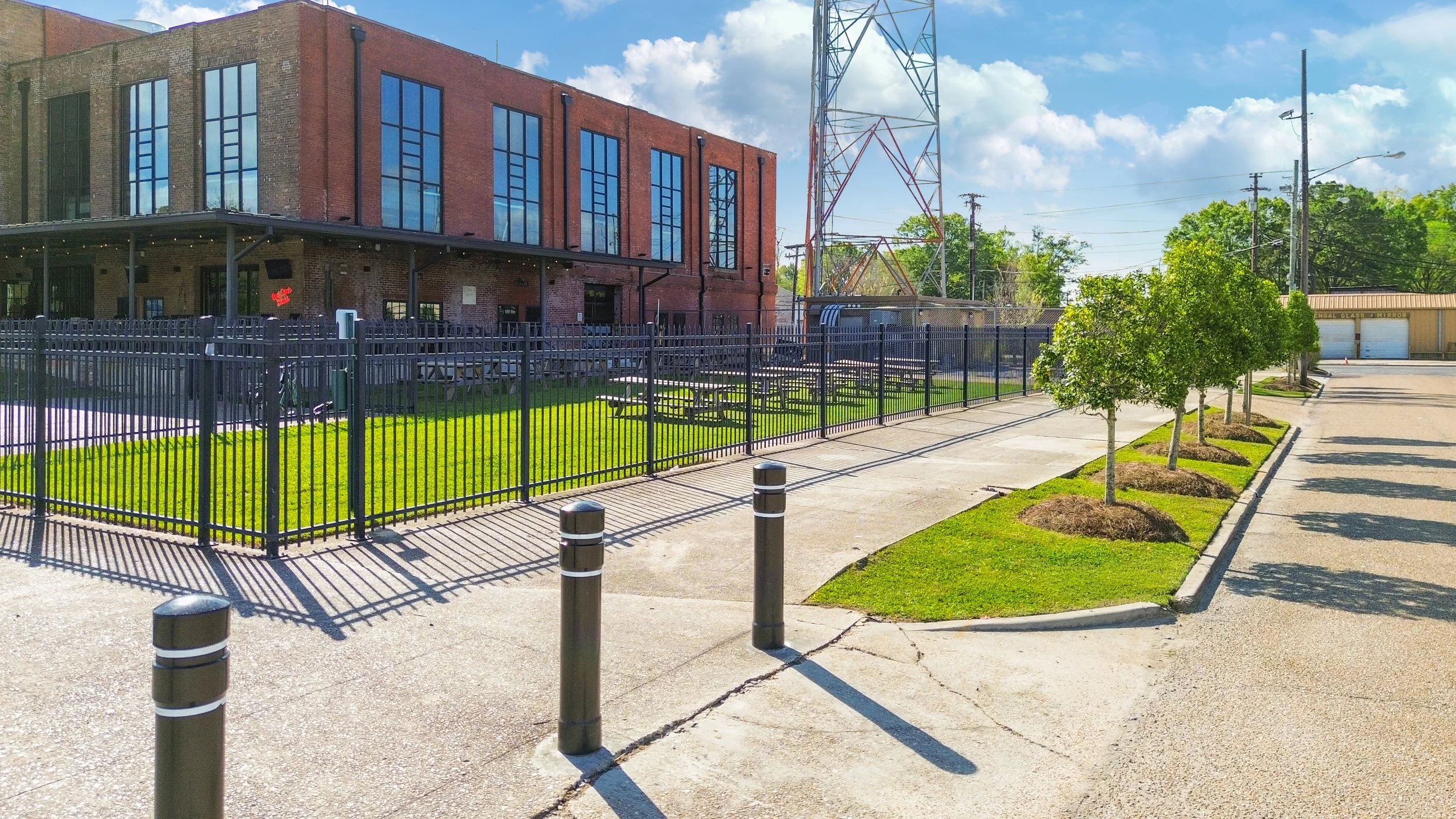
The frequency table and the standards usually separate two commercial maintenance bids at a similar annual price. Two proposals land within a few percent of each other and still differ by a dozen service visits across the year once the seasonal schedule is compared line by line.
Read what happens to clippings and debris, who is responsible for damage to irrigation heads, and whether fertilization is a named program with application timings or a single line item. Price differences on grounds contracts are usually visit-count differences wearing a disguise. Laying the two frequency tables side by side exposes them quickly.
How Should a Commercial Maintenance Contract Price Be Structured?
A commercial maintenance contract price should be an annual figure divided evenly across twelve invoices, with seasonal or per-occurrence work quoted separately and named in advance.
Billing by visit invites a contract to be thinned in the quiet months, which is precisely when the work that protects the next growing season gets done.
An open-ended extras line should be avoided on either model, since that is where a competitive annual price quietly becomes an expensive one.
Who Should Be Accountable on a Commercial Maintenance Contract?
A named account contact, with a defined response window and an escalation path, should be accountable on a commercial maintenance contract.
General phone lines are where commercial relationships quietly fail, because a property manager who reaches an answering service on a Tuesday afternoon does not usually call back on Wednesday.
Writing a name and a response commitment into the contract costs nothing and changes the behavior it describes. It also gives you something concrete to raise at renewal rather than a general sense that communication could be better.
What Should a Property Expect in the First Ninety Days of a New Contract?
A property should expect correction first and rhythm second in the first ninety days of a new contract. The first month usually goes to bringing edges, bed definition and turf height back to the standard written into the contract, which looks like more activity than the steady state involves.
The second month should settle into the frequency table. By the third, the reporting record should be detailed enough that a manager sees whether the standards are being met without walking the property. A program that still feels unpredictable at ninety days has a loosely written scope rather than an underperforming crew.
What Does a Transition From an Incumbent Contractor Involve?
A transition from an incumbent contractor involves a photographed, dated condition survey in the first week, so the state of the property at handover is a record rather than a memory.
Irrigation controllers get located and documented zone by zone, since undocumented systems are the most common inherited problem.
Anything found in deficit is quoted as remedial work rather than absorbed silently, which protects both parties from an argument in month four about what was already there.
How Should a Commercial Maintenance Renewal Be Approached?
A commercial maintenance renewal should be approached with the year of reports on the table and the scope open for revision. A program written twelve months earlier will have items nobody uses and gaps that showed up repeatedly, and a renewal that repeats the prior document carries both forward.
The productive version looks at the record of findings, adjusts frequency where the data says it should move, and reprices only what changed. An increase tied to named scope changes or a published labor index is a figure a property manager takes to a board, while an unexplained percentage gets argued about every year.
A contractor who resists reopening the scope is protecting something in the original document worth asking about.
How Does Grounds Condition Affect a Commercial Property?
Grounds condition sets the first impression a tenant, customer or prospective lessee forms of the whole property. Worn bed edges and thin turf at an entrance read as deferred maintenance generally, fairly or otherwise.
For retail and multi-tenant properties that impression has a commercial consequence, which is the honest argument for treating grounds as a managed asset rather than a line to minimize at renewal.
Put Your Commercial Landscape Maintenance Scope in Front of Us
Schedule a site walk and we will measure the property, read your existing scope and show you where it falls short of enforceable. Flora Landscape Contractors returns a frequency table and measurable standards, so the grounds contract gets held to something specific.
Schedule your commercial landscape maintenance site walk with Flora Landscape Contractors.
In Summary
What should a commercial maintenance scope specify?
A commercial maintenance scope should specify visit frequency by service, measurable standards rather than adjectives, a named point of contact, and how additional work gets approved. A scope written in those four terms is enforceable, while one written in adjectives is not.
How do you compare bids that look the same on price?
Compare bids that look the same on price by counting the visits and reading the standards. Two proposals at a similar annual figure often differ by a dozen service visits a year once the frequency table is compared line by line.
When should a property go out to bid?
A property should go out to bid early enough that the incoming contractor walks the site before the growing season starts. Transitions agreed in late winter go far more smoothly than ones agreed in May.
Who is accountable when something is missed on a Baton Rouge property?
The person the contract names is accountable when something is missed, which is why Flora Landscape Contractors writes a named account contact into every scope rather than a general phone line. A property manager who reaches an answering service on the first call rarely makes a second.
Related: Crafting Outdoor Masterpieces With Expert Landscaping in Village St. George and Oak Hills Place, LA